Studying for India's Toughest Ag Entrance Exam From Ohio: A Time-Zone Playbook for NRI Candidates
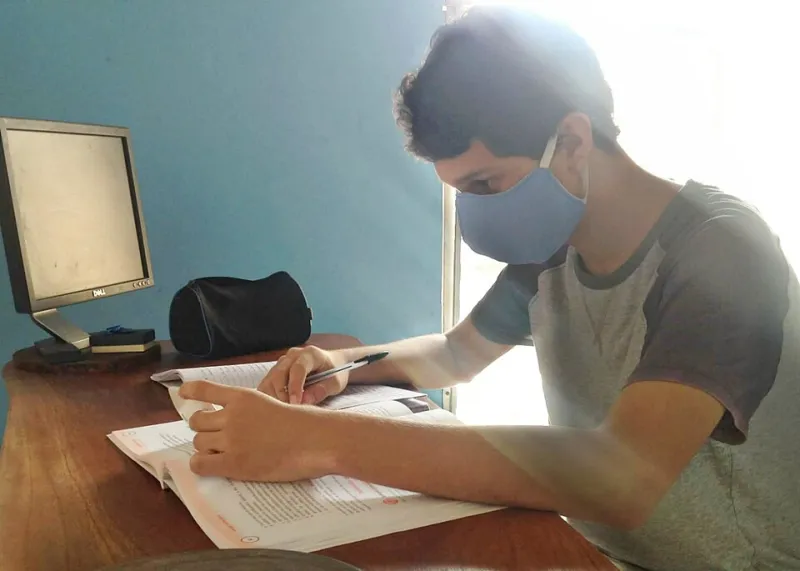
Photo: Oa.coello, CC BY-SA 4.0, via Wikimedia Commons
For most Indian students, preparing for the UP Common Agriculture and Technology Entrance Test (UP CATET) is a matter of routine: coaching classes after school, mock tests on weekends, and a familiar exam center a short train ride away. For an NRI candidate living in Ohio, Texas, or California, the equation changes entirely. The syllabus is the same, but everything around it — time zones, study materials, coaching schedules, and exam-day logistics — demands advance planning.
This guide walks through the practical realities of preparing for UP CATET from a US time zone, offering a backward-planned timeline and hard-won advice from families who have done it.
The Time-Zone Problem, Reframed
India runs roughly nine and a half to twelve hours ahead of the continental United States, depending on daylight saving time. That gap is often described as a barrier, but successful NRI candidates tend to treat it as a scheduling tool instead.
A coaching class streamed at 6 p.m. in Lucknow lands at 7:30 a.m. in Chicago — a natural pre-school review session. Conversely, evening hours in the US are ideal for self-study, when Indian doubt-solving forums and WhatsApp study groups go quiet. The families who thrive are those who build a fixed daily block of ninety minutes to two hours, protected like any other commitment, rather than trying to stay in sync with India's coaching rhythms.
One practical note: US daylight saving shifts do not align with India's absence of them. Twice a year, your carefully calibrated schedule will drift by an hour. Recheck class times in March and November.
Sourcing Materials Across the Ocean
UP CATET preparation rests on the official syllabus, NCERT-level science fundamentals, and previous years' question papers. All of these are downloadable, which removes the biggest historical obstacle for overseas candidates. What still requires effort:
- Printed guides and regional-language resources. If a candidate prefers Hindi-medium materials, relatives in India often ship books, or families use consolidator services that forward parcels from India to US addresses. Order early — international shipping can take three to six weeks.
- Mock test platforms. Several Indian test-prep apps now run entirely in the cloud and accept international payment cards. Verify in advance that your card works; a failed payment the night before a mock exam is a preventable stressor.
- Coaching access. Many Uttar Pradesh coaching institutes now offer recorded lectures, which suit overseas schedules far better than live sessions. Ask specifically about recorded access before enrolling.
A Backward-Planned Timeline
Work backward from the expected exam date — typically held in India in late spring or early summer — and build in the travel realities of an international trip.
Six months out: Lock your syllabus coverage plan. Confirm your passport is valid with at least six months beyond your travel dates, and begin the Indian visa process if the candidate does not already hold OCI or PIO status. Visa appointments at Indian consulates in the US can take weeks.
Four months out: Complete the UP CATET application form online, carefully entering name and date of birth exactly as they appear on the passport — mismatches are the most common reason admit cards are held up. Pay the fee using an internationally enabled card and save every confirmation.
Two months out: Shift from learning to revision. Take one full-length mock test per week under timed conditions, using the same two-and-a-half-hour window as the real exam — even if that means an early-morning sitting in the US.
Three weeks out: Book flights. Aim to land in India at least five to seven days before the exam to absorb jet lag, which hits harder than most teenagers expect when flying east. Confirm the exam city listed on the admit card and plan ground travel to it.
Exam week: Print multiple copies of the admit card and a valid photo ID. Visit the exam center the day before if possible. Indian entrance exam centers enforce strict rules on what may be carried inside — transparent water bottles, no smart watches — and it is worth reviewing the instructions on the admit card line by line.
After the Exam: Staying in the Game Remotely
The exam is not the finish line. Counseling rounds, seat allotments, and document verification follow, often on short notice. NRI families should designate a relative in India with a power-of-attorney-style arrangement for document handling, keep scanned copies of every certificate in a shared cloud folder, and monitor the official counseling portal daily during the allotment window.
The Bottom Line
Cracking UP CATET from a US time zone is less about brilliance and more about logistics: a protected study block, materials sourced early, a passport and visa handled months in advance, and a travel buffer built around the exam date. Students who treat the process like a project — with deadlines, checklists, and a backup plan — routinely outperform those who try to replicate the Indian coaching experience from a distance. The exam rewards preparation; the ocean between you and the test center only rewards planning.