Beyond Tuition: How UP CATET Qualifiers Fund Their Agriculture Degrees — and How It Differs From the American Aid Model
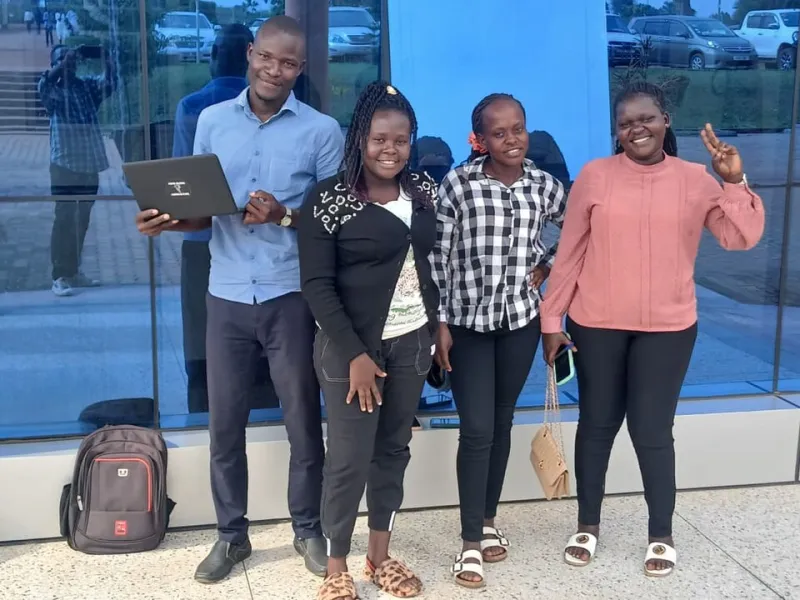
Photo: Issabella Am, CC BY-SA 4.0, via Wikimedia Commons
When an American family first encounters the cost of an agriculture degree at an Indian state agricultural university, the sticker price often produces a moment of disbelief. Annual tuition at many UP CATET-participating institutions can run lower than a single semester's textbook bill at a US land-grant university. But low tuition is only the beginning of the story. The funding architecture surrounding these programs — waivers, stipends, and state subsidies — operates on logic quite different from the FAFSA-driven system American families know well.
The Baseline: Heavily Subsidized Public Tuition
Most universities admitting students through UP CATET (the UPCATET exam administered for admission to B.Sc. agriculture and allied programs across participating institutions in Uttar Pradesh and neighboring states) are public institutions with tuition set far below cost recovery. A rough parallel exists in the United States: land-grant universities were founded on the principle of accessible agricultural education, and in-state tuition at institutions like Iowa State or Purdue reflects that mission.
The difference is one of degree. Where an in-state land-grant student might pay $9,000–$12,000 annually in tuition, a UP CATET qualifier at a comparable Indian institution may pay the equivalent of a few hundred dollars per year. The state government absorbs the remainder as an implicit subsidy — no FAFSA, no loans, no Expected Family Contribution calculation required.
Merit Scholarships That Resemble Athletic Recruitment
Beyond subsidized tuition, Indian agricultural universities and state governments operate merit scholarship programs that American families might best understand through the lens of athletic or academic recruitment aid. High-scoring UP CATET candidates, and later, top-ranked students within their cohorts, can access:
- Merit-based tuition waivers, sometimes covering the full academic fee for students ranking at the top of the entrance examination
- Named scholarships funded by state governments, often tied to rural residence, gender, or specific farming-family backgrounds
- National scholarships through central schemes such as the National Scholarship Portal, which reward academic performance across undergraduate agriculture programs
Unlike US merit aid, these awards are rarely negotiated. There is no financial aid office crafting a personalized package; eligibility flows from entrance exam rank and subsequent academic standing. For NRI families, this means the funding outcome is largely determined before the first semester begins — a stark contrast to the annual FAFSA renewal cycle.
Stipends: The Feature With No True US Equivalent
The most distinctive element of Indian agricultural education funding is the stipend structure attached to certain programs, particularly at the postgraduate level and in specialized undergraduate tracks. Research assistantships, RAWE (Rural Agricultural Work Experience) support, and ICAR-linked fellowships can provide students with modest monthly payments simply for pursuing their studies.
American undergraduates generally encounter paid work only through work-study or part-time employment, which is separate from their academic program. In India, the stipend is woven into the degree itself — a recognition that agriculture students are expected to contribute to research and extension work as part of their training. A student in a master's program at an agricultural university may effectively be paid to complete their degree, albeit at a level that covers living costs rather than builds savings.
Budgeting Realistically: What NRI Families Should Model
For families in the United States supporting a UP CATET candidate, the practical budgeting exercise looks less like a college savings plan and more like a cost-of-living estimate. The primary expenses are:
- Hostel and mess fees, typically the largest line item, though still modest by US housing standards
- Travel, including international flights and seasonal visits
- Personal expenses and technology, since laptops and reliable internet represent a real cost differential
- Application and counseling logistics, including document attestation and remittance fees
Tuition itself often fades to a rounding error. Families accustomed to the American anxiety over student debt may find the absence of loan obligations disorienting — but it also means less flexibility. There is no borrowing against future earnings to smooth out cash flow; costs must be met as they arise.
The Trade-Offs Worth Understanding
No funding system is without friction. Indian scholarships and stipends frequently carry service conditions — some state-funded awards require graduates to serve in rural postings or within the state's agriculture department for a defined period. International students and NRI candidates should read eligibility criteria carefully, as some schemes are restricted to domicile holders or specific categories of applicants.
Compare this with the American model, where aid is portable but debt follows the graduate for decades. Neither system is strictly better; they embody different philosophies about who should bear the cost of training the next generation of agricultural professionals.
A Practical Bottom Line
For a US-based family, the honest summary is this: an Indian agriculture education accessed through UP CATET is funded primarily by the state, supplemented by merit-based awards and, in some cases, stipends — with the family's contribution focused on living costs rather than tuition. The financial aid counseling sessions, loan applications, and renewal deadlines that dominate the American college experience simply do not map onto this system.
Understanding that difference early allows families to plan accurately, set aside realistic sums for housing and travel, and appreciate that the heaviest lifting — the subsidy — has already been done by the public investment on the other side of the world.