Question Banks Without the Paywall: What India's UP CATET Mock-Test Culture Teaches America's Subscription-Weary EdTech Market
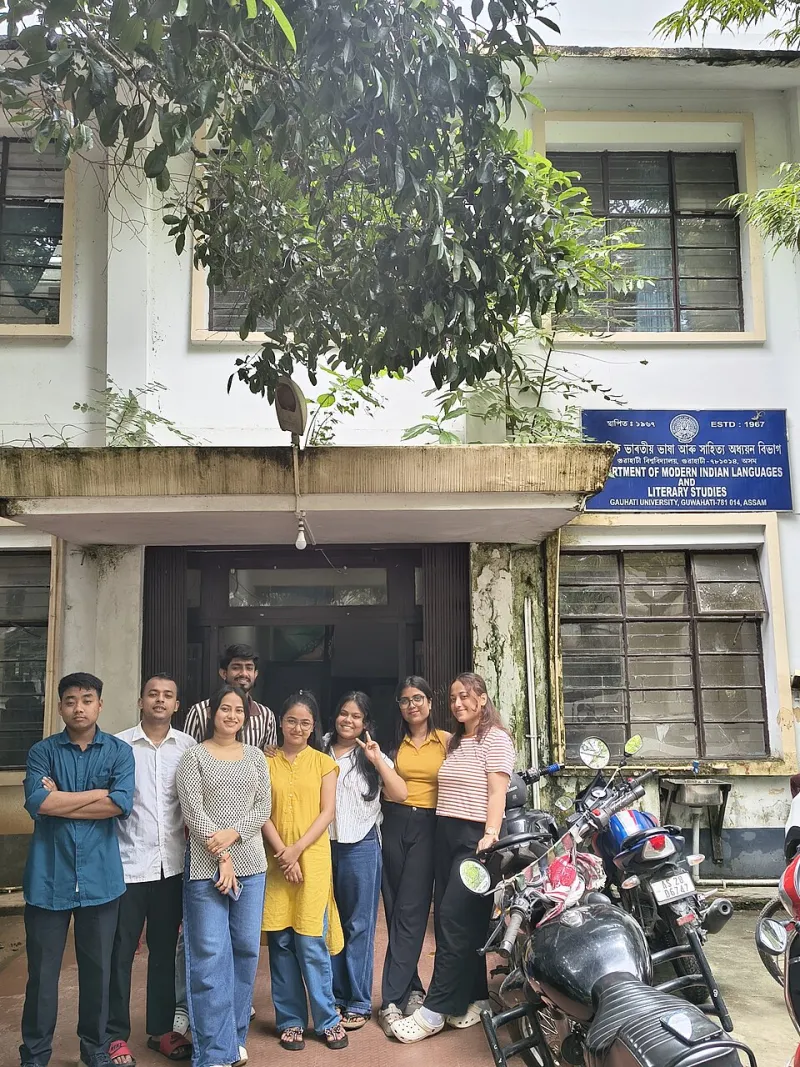
Photo: Nihali Barman, CC BY 4.0, via Wikimedia Commons
A Practice Ecosystem Built on Access, Not Access Fees
For most American families, preparing for a standardized exam means a decision about spending: a few hundred dollars for a self-paced course, or well over a thousand for private tutoring. In India, the millions of candidates sitting for state-level agriculture entrance examinations such as the UP Combined Agriculture and Technology Entrance Test (UP CATET) operate in an almost inverted economy. The core preparation materials — full-length mock tests, previous-year papers, subject-wise question banks — circulate widely at no cost or nominal cost, and the revenue, where it exists, is collected later and from fewer people.
This is not a niche phenomenon. It is the dominant preparation culture for entrance exams across India's state agricultural universities, and it offers a revealing contrast for American educators, edtech founders, and parents watching subscription fatigue set in stateside.
How UP CATET Aspirants Actually Study
Ask a qualified candidate how they prepared and a familiar pattern emerges. First comes the syllabus, usually downloaded free from the university's admissions portal. Then comes the question bank: previous years' papers, often scanned, annotated, and re-shared across platforms. YouTube channels run by coaching instructors post full solution walkthroughs — a chemistry section solved line by line in Hindi or English, available to anyone with a data connection.
Telegram and WhatsApp groups serve as the informal backbone. Doubt groups dedicated to UP CATET subjects — physics, chemistry, mathematics or biology, and discipline-specific topics like horticulture or animal husbandry — can field a question within minutes. Senior candidates who cleared the previous cycle often moderate these groups voluntarily, a tradition of peer support that echoes the study-cooperative model long familiar in Indian engineering and medical exam preparation.
Paid coaching exists, of course, particularly in urban centers like Lucknow and Varanasi. But the paid tier is a supplement, not a prerequisite. A candidate with a smartphone, patience, and discipline can assemble a complete preparation program for the price of mobile data.
The Practice-First, Pay-Later Logic
What looks like generosity is actually a coherent business model, one that several Indian edtech operators describe as "practice-first, pay-later."
The free question bank functions as customer acquisition at scale. A coaching institute or content platform that publishes accurate solutions to past papers builds reputation among precisely the audience it will later monetize — through live classes, personalized mentoring, or premium test series with analytics. Revenue concentrates at the top of the preparation funnel among candidates who want structure and accountability, while the raw material of preparation remains broadly accessible.
"In the American market, the exam-prep product is the subscription," one Indian educator who now consults for US-based platforms told us. "In ours, the exam-prep product is trust. The subscription is just where trust gets collected."
The economics are enabled by scale. A single well-produced solution video for a UP CATET physics section might serve tens of thousands of candidates across multiple admission cycles. Marginal cost approaches zero; the same logic that makes broadcast media cheap makes broadcast tutoring cheap.
The American Counterpart — and Its Strain
The contrast with the US test-prep market is stark. The College Board offers free practice through Khan Academy for the SAT, a genuinely significant public-private resource. But beyond that flagship partnership, the landscape is dominated by tiered subscriptions: monthly fees for adaptive question banks, premium tiers for analytics, premium-plus tiers for human feedback. AP exam preparation, in particular, remains fragmented — review books, paid video courses, and tutoring, with little in the way of a unified free question ecosystem.
American edtech founders point to real differences that complicate direct imitation. The US market is smaller per exam, college-bound testing is one decision among many rather than a single high-stakes gatekeeper, and regulatory expectations around student data are stricter. Free content also raises quality-control questions: India's ecosystem has its share of error-riddled answer keys and unverified solutions, a problem that informal networks absorb but that a liability-conscious American company might not.
Still, the directional pressure is unmistakable. American students and parents increasingly share practice materials in Discord servers and Reddit communities, an organic echo of the Telegram groups in Uttar Pradesh. The demand for free, community-curated practice is not an Indian quirk; it is a universal student behavior that the US market has been slower to formalize.
What US Platforms Could Borrow
Three elements of the UP CATET model translate more readily than others:
Publish the canon for free. Previous-year questions and official practice material should be the open floor of any test-prep business, not the ceiling of a free trial. Trust built on accurate, well-explained solutions is the asset that premium tiers monetize.
Let community do the support work. Moderated peer doubt-solving — whether on Discord, a platform-native forum, or group chat — reduces support costs and deepens engagement in ways that FAQ pages cannot.
Charge for structure, not content. Analytics, study schedules, accountability, and human feedback are what paying students actually need once content is abundant. Pricing against scarcity of attention, rather than scarcity of information, aligns the business with the learner.
Two Markets, One Lesson
The UP CATET preparation economy emerged not from philanthropy but from competition among providers serving price-sensitive candidates at national scale. American edtech faces its own version of that pressure as families question recurring subscriptions and free alternatives proliferate. The Indian model suggests the destination: content as common ground, revenue as a premium on guidance.
For the agriculture students this site follows, the practical takeaway is simple — a disciplined UP CATET candidate needs little more than a syllabus, a question bank, and a community of peers. It may not be long before American students preparing for their own high-stakes exams expect nothing more, and nothing less.