Rupee Tutors and Dollar Prep: What the American Test-Prep Industry Overlooks About India's Low-Cost Coaching Model
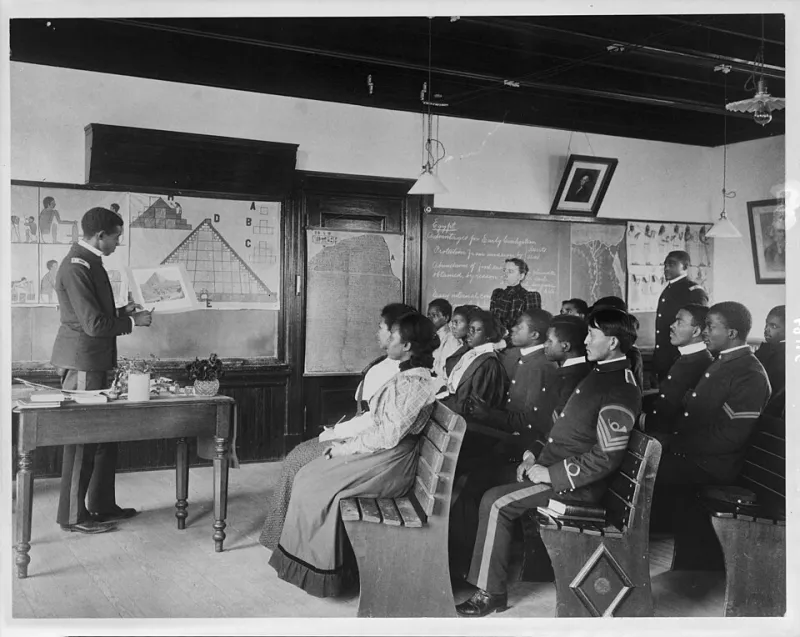
Photo: Frances Benjamin Johnston, Public domain, via Wikimedia Commons
In the United States, a family preparing a student for a high-stakes exam can expect to pay $100 to $300 per hour for private tutoring, with premium boutique firms charging considerably more. In Uttar Pradesh, a candidate preparing for UP CATET — the combined agriculture entrance examination serving several state agricultural universities — might spend the equivalent of ten dollars on a complete mock test series. The gap between those two numbers is not a curiosity. It is a business model, and it is worth American educators and edtech founders studying closely.
The Economics of Scale
India's coaching economy is built on a simple premise: when the addressable market is enormous, per-unit pricing can collapse toward zero and the enterprise can still be viable. More than a hundred thousand candidates sit for agriculture and allied-science entrance exams in any given cycle. A coaching operation that sells a digital mock test series for ₹500 — roughly six dollars — does not need many conversions to cover content development costs. The same product sold in a market of fifty thousand test-takers would require a tenfold price point to survive.
This is not a story of inferior quality, as is sometimes assumed. The top free YouTube academies in the Indian test-prep space employ experienced faculty, some of them former university lecturers, and their recorded lecture libraries routinely accumulate millions of views. Revenue comes not from the videos themselves but from adjacent products: printed question banks, doubt-clearing subscriptions, and offline batches in cities like Lucknow and Kanpur.
The Anatomy of a ₹500 Mock Test
To understand the model, consider what a low-cost mock test series for UP CATET actually contains. A typical package includes ten to fifteen full-length papers aligned to the official syllabus — covering physics, chemistry, mathematics or biology, and agriculture-specific content — plus detailed solutions and rank-prediction analytics. The production cost is largely front-loaded: once the question bank exists, distribution through a mobile app or a simple PDF delivery costs nearly nothing.
Contrast this with the American market, where practice tests are frequently bundled into subscription platforms costing $50 to $100 per month. The difference is not primarily technological. It is competitive intensity. Indian coaching firms operate in a market where candidates have near-perfect price transparency, communicate constantly through WhatsApp groups, and will abandon any provider perceived as overpriced. The discipline that imposes is unforgiving — and instructive.
WhatsApp as Infrastructure
Perhaps the most underappreciated element of the Indian model is the role of informal peer networks. WhatsApp study groups for UP CATET aspirants function as distributed support systems: members share scanned notes, alert one another to counseling deadlines, crowdsource explanations for difficult agronomy questions, and coordinate around admit-card releases. The groups cost nothing to operate and, for many rural candidates, substitute for services that American students would expect to purchase.
There is a lesson here for community colleges and first-generation-focused programs in the United States. Structured peer cohorts — even something as unglamorous as a group messaging thread moderated by a student leader — deliver retention benefits that expensive advising software often struggles to match. The Indian model treats peer support as infrastructure rather than add-on.
What Translates — and What Does Not
A fair analysis requires honesty about limits. India's coaching economy coexists with intense exam pressure, and the volume-driven model can encourage rote preparation over conceptual mastery. The American regulatory environment, with its expectations around accessibility, refund policies, and data privacy, would also complicate a direct transplant of the ₹500 price point. Labor costs differ dramatically; a tutor earning a sustainable US wage cannot deliver live instruction at Indian price levels.
But several elements translate cleanly:
- Front-loaded content, near-zero marginal cost. Recorded lecture libraries and reusable question banks allow American edtech firms to serve low-income students at price points currently considered unprofitable.
- Unbundled products. Rather than selling $2,000 comprehensive packages, US providers could offer standalone mock tests, single-subject modules, and answer-verification services at entry-level prices, upselling only where families choose to.
- Community-moderated study groups. Formalizing the WhatsApp model — with trained peer moderators and institution oversight — could give community colleges a scalable advising complement.
- Rank-analytics transparency. Indian mock platforms tell candidates precisely where they stand against the field. American practice products rarely do, leaving students to guess whether a 1280 SAT score is competitive for a given program.
A Sidebar for Entrepreneurs and Educators: The Cost Comparison
| Service | Typical US Price | Typical Indian Equivalent |
|---|---|---|
| Private tutoring, per hour | $100–$300 | $3–$8 (group batch, per-session share) |
| Full mock test series | $150–$400 | $5–$10 |
| Recorded lecture library | $500–$2,000 (course bundles) | Free to $20 via YouTube academies |
| Peer study network | Often bundled or unavailable | Free (WhatsApp groups) |
| Doubt-clearing access | $50–$100/month subscriptions | $10–$25/month regional platforms |
The numbers are not directly comparable — wage structures, market sizes, and regulatory costs differ — but the directional insight is clear: the American market has substantial room for price-unbundled, community-supported preparation models serving students whom the current industry prices out.
The Takeaway
The proctor with the OMR sheets and the candidate who prepared with a six-dollar test series and a WhatsApp group represent more than an exotic exam-day scene. They represent a functioning, resilient, low-cost preparation economy that produces qualified agriculture students at national scale. American test-prep companies, edtech founders, and community college administrators looking for models that expand access without expanding budgets would do well to look past the price shock and study the mechanics underneath.