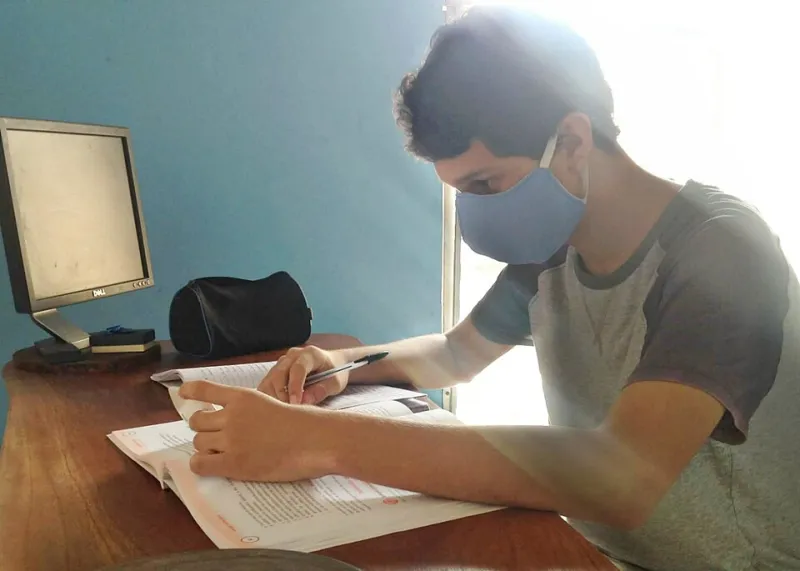
From Exam Hall to Farm Gate: How India's UP CATET Pipeline Compares to America's Cooperative Extension Workforce
Photo: Harris & Ewing, photographer, Public domain, via Wikimedia Commons
Ask any county extension agent in Iowa or Georgia how they found their way into the job, and you will hear a familiar story: an agriculture degree, a graduate assistantship, an internship, and eventually an opening at the local land-grant partner office. Ask the same question of an extension officer in Uttar Pradesh, and the answer often begins with a single standardized examination — UP CATET.
That difference in how the two countries identify their future agricultural educators is more than trivia. It shapes who enters the profession, when they commit to it, and how well universities can plan for the rural outreach workforce they will need a decade later.
Two Systems, Two Philosophies
The American Cooperative Extension System grew out of the Smith-Lever Act of 1914, pairing land-grant universities with county-level offices. Recruitment into extension careers has always been organic: students discover extension work through internships, 4-H involvement, or graduate programs, then apply for positions as they open. It is flexible, but it is also reactive. Universities rarely know how many future agents are in the pipeline at any given moment.
India takes the opposite approach. State agricultural universities — including those serving Uttar Pradesh through the UP CATET admissions process — admit students into degree programs via a centralized entrance examination covering physics, chemistry, biology or mathematics, and agriculture. The exam funnels a defined cohort into undergraduate seats each year, and a meaningful share of those graduates go on to staff state extension infrastructure, Krishi Vigyan Kendras (farm science centers), and district agriculture departments.
The result is a system where the supply of future field-level agricultural educators is, in principle, visible years in advance. American institutions have no equivalent visibility.
What the Entrance Exam Actually Does
Critics of standardized testing in the United States have plenty of ammunition, and a national exam for extension careers would face legitimate objections. But it is worth being precise about what UP CATET accomplishes. It is not a certification for extension work itself; it is a sorting mechanism for admission to agricultural universities whose curricula include mandatory rural attachment — the Rural Agricultural Work Experience, or RAWE, program — in which undergraduates live and work in villages before graduating.
That combination matters. A centralized exam creates a large, motivated applicant pool; the university curriculum then deliberately orients students toward field advisory work. By the time an Indian graduate seeks an extension-adjacent post, they have typically already spent weeks embedded in rural communities, running demonstration plots and farmer interactions.
In the US, by contrast, a student can complete a bachelor's in crop science or animal science at a respected land-grant university without a single structured placement in a county extension office. Extension careers are often discovered late, sometimes after a first job elsewhere.
The Case for Earlier Identification
American extension services face a well-documented succession challenge: retiring agents, thin applicant pools in rural counties, and a generation of students who may never have heard of the Smith-Lever system. Could a UP CATET-style mechanism help?
The honest answer is that no one is proposing a national entrance exam for extension. But the underlying logic — early identification, structured field exposure, and a visible pipeline — translates into feasible reforms:
- Extension-focused admission tracks. Land-grant universities could offer designated first-year cohorts or scholarships for students who declare an interest in extension careers, selected through a competitive application process rather than chance encounters.
- Mandatory field experience. Borrowing the RAWE model, every agriculture major could complete a semester-length placement in a county office or with an agribusiness advisor before graduation.
- Pipeline forecasting. A centralized application or scholarship pool would give extension administrators real data on how many students intend to enter the field — the kind of workforce planning Indian universities effectively get for free.
Where the Parallel Breaks Down
A balanced comparison requires acknowledging what the Indian model does not solve. Centralized exams in India have faced scrutiny over access inequities, coaching costs, and rural candidates' preparation gaps — the same critiques leveled at standardized testing in America. Extension positions in Indian state systems also contend with budget constraints and political staffing pressures that a cleaner pipeline cannot fix.
Moreover, the US system's openness has virtues India's does not. Mid-career professionals, veterans, and community-college transfers regularly enter American extension careers — a flexibility that a single-exam gateway at age eighteen would never permit.
A Practical Takeaway for US Educators
The lesson from UP CATET is not the exam itself but the sequencing. India identifies agricultural talent early, commits it to a degree pathway with built-in field experience, and releases graduates into extension-adjacent roles with that experience already on their transcripts. American institutions can capture most of that benefit through scholarships, mandatory rural placements, and deliberate pipeline tracking — no national test required.
For US ag educators watching international systems, the UP CATET pipeline is a useful mirror. It shows what a workforce looks like when a country treats extension staffing as something to be planned rather than hoped for.