Inside India's Centralized Agriculture Admissions: A Primer on UP CATET for American Educators and Students
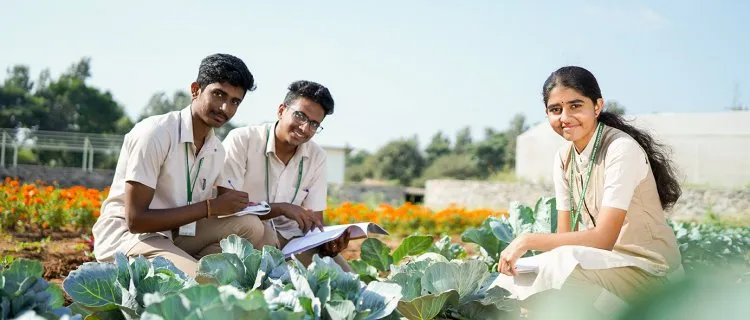
Photo: agricultural university students India field research, via eng.ruralvoice.in
When American students think about studying agriculture, their mental map rarely extends beyond land-grant universities like Iowa State, Texas A&M, or Cornell. Yet halfway around the world, one of the largest and most structured agriculture admissions systems operates at scale in northern India. The UP Combined Agriculture and Technology Entrance Test — commonly called UP CATET — governs entry into a network of agricultural universities in Uttar Pradesh and serves as a compelling point of comparison for anyone in the American education or agri-research community.
What Exactly Is UP CATET?
UP CATET is a centralized entrance examination administered to admit students into undergraduate, postgraduate, and doctoral programs across agriculture, horticulture, forestry, veterinary science, home science, and agricultural engineering at participating state agricultural universities. Think of it as India's equivalent of a single, discipline-specific admissions gateway — not unlike if every land-grant college in a single US state pooled its admissions into one standardized test.
The exam consolidates what would otherwise be dozens of separate application processes into a unified pipeline. For American observers accustomed to holistic admissions review — essays, extracurriculars, recommendation letters — UP CATET's emphasis on a single high-stakes examination represents a fundamentally different philosophy of merit assessment.
Eligibility: Who Can Sit for the Exam?
Eligibility requirements vary by program level, but the core criteria are consistent:
- Undergraduate programs: Candidates must have completed their 10+2 (senior secondary) education with science subjects, typically including biology or agriculture. India's 10+2 structure roughly corresponds to an American high school diploma with a STEM concentration.
- Postgraduate programs: A relevant bachelor's degree in agriculture or an allied field is required.
- Doctoral programs: A master's degree in the relevant discipline.
Domicile requirements matter considerably. UP CATET primarily serves residents of Uttar Pradesh, though seats are often reserved for candidates from other Indian states. For international applicants, direct admission through UP CATET is uncommon — the exam is designed for domestic students — but understanding the system remains valuable for exchange programs, research collaborations, and comparative education studies.
Exam Structure and Subject Coverage
The test itself is typically administered in an offline, pen-and-paper format, with question papers tailored to the level and discipline of admission. Undergraduate papers generally assess:
- Core science fundamentals (physics, chemistry, biology or mathematics)
- Agricultural science concepts for candidates from agriculture-focused streams
- General knowledge and reasoning
Postgraduate and doctoral papers drill deeper into specialized subject matter, from plant breeding and soil science to animal husbandry and agricultural economics. Multiple-choice questions dominate the format, and scores are ranked to determine seat allocation during counseling rounds — a process resembling a centralized match system, somewhat analogous to the National Resident Matching Program used for medical residencies in the United States.
Why American Students and Researchers Should Care
Even if a US student never sits for the exam, UP CATET offers three practical takeaways:
1. A benchmark for agricultural education capacity. Uttar Pradesh is India's most populous state and an agricultural powerhouse. The scale at which UP CATET operates — processing hundreds of thousands of applicants — illustrates how a developing economy industrializes agricultural training. Researchers in agricultural policy and comparative education frequently cite such systems in cross-national studies.
2. A gateway context for exchange and collaboration. American universities with strong international agriculture programs — including partnerships focused on food security, climate-resilient crops, and rural development — often engage with Indian agricultural universities. Knowing how their students are selected provides useful context for designing exchange curricula and dual-degree proposals.
3. A lens on global agri-talent pipelines. For US agribusiness firms and graduate admissions offices, understanding India's centralized system helps explain the academic backgrounds of Indian applicants — many of whom arrive at American graduate schools with rigorous, exam-driven undergraduate training in agronomy, entomology, and related fields.
The Counseling and Seat Allocation Process
Unlike the American model where admitted students simply accept an offer, UP CATET qualifiers proceed through structured counseling rounds. Candidates rank their preferred universities and programs, seats are allotted based on exam rank and category-based reservations, and document verification follows. India's reservation system — allocating seats for historically disadvantaged groups — is a constitutional feature with no direct US parallel, and it significantly shapes the admissions landscape.
Practical Notes for Education Consultants
US-based consultants advising internationally mobile families or building India partnerships should note a few operational realities:
- Application windows typically open in the spring, with exams and counseling extending through the summer months — a calendar that roughly mirrors the American admissions cycle but compresses decision timelines considerably.
- Official notifications, syllabi, and counseling schedules are released through the administering university's portal, and deadlines are strict.
- Because the exam is state-level rather than national, students targeting agricultural programs in other Indian states will encounter different but similar exams, such as state-level agriculture tests elsewhere.
The Bottom Line
UP CATET is more than an entrance test; it is a window into how the world's most populous nation structures its agricultural talent pipeline at scale. For American students considering global perspectives on food systems, for researchers comparing admissions models, and for consultants building US-India academic bridges, a working knowledge of this system is genuinely useful. As global challenges like climate-smart agriculture and food security demand cross-border collaboration, understanding the pathways that train India's agricultural workforce becomes not just academically interesting, but practically essential.